Plan a Leisure Ride After Rain Without Repeating the Same Old Loop
Plan a leisure ride after rain with a route that suits damp paths, sheltered stops and changing skies, so you can choose a comfortable way out and back.
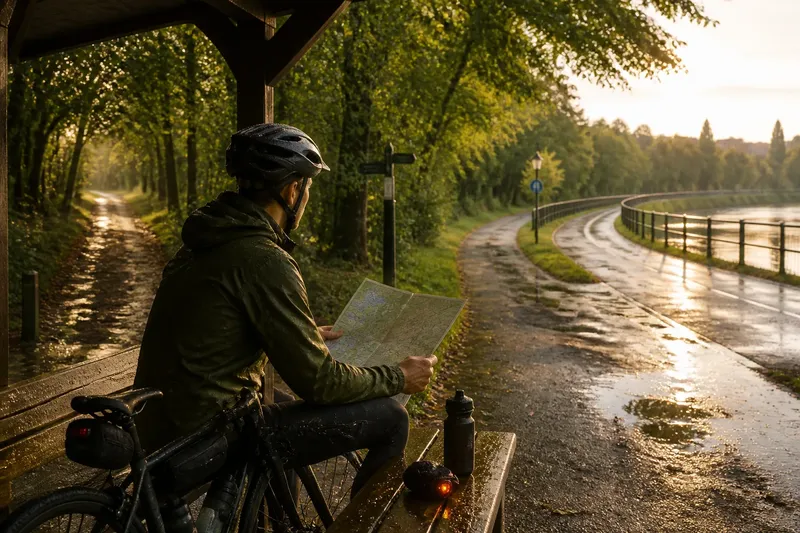
Which route still feels appealing after rain, when puddles linger beneath trees and a familiar path may be slippery? To plan a leisure ride after rain, choose for the surface and shelter as much as for the destination. A route you enjoy in dry weather may need a different return or a quieter stopping place after a shower.
Choose a route for its surfaces, not just its scenery
Think about what the rain has left behind. A paved riverside path may drain quickly in one stretch and hold water in another; a shaded woodland track can stay damp long after open streets dry. Favour surfaces you already know how to ride, and leave muddy or slick sections out if they make you uncertain.
Check the route on a map and look for practical alternatives: a parallel street, a well-used paved path or a direct connection back home. If a route depends on a narrow track that could be boggy, choose another way rather than assuming it will be passable. Treat the map as a planning aid, not a live report of path conditions.
Imagine you had planned a loop through a wooded park, but rain has left its unpaved section soft. You check the map, spot a paved road running alongside the park, and plan to use it for the return. The trade-off is less time among the trees in exchange for a clearer, more predictable way home.
Find shelter and stopping places along the way
Open routes can feel exposed when the breeze picks up after rain. Look for a sheltered bench, a covered public stop or a nearby street where you can pause without blocking the path. Choose places you can recognise, and avoid relying on a remote shelter as your only option if you decide to turn back.
A short pause can also help you reassess the conditions. Notice whether the clouds are clearing, whether the surface ahead looks worse than expected, and whether you still feel comfortable. Like choosing the dry side of a doorway to wait out a shower, a sheltered stopping point gives you a moment to decide without making the whole ride depend on the weather improving.
Use a route check that leads to a clear choice
Before setting off, review the route in an app or on a paper map. For each point below, make the decision stated; if the more cautious option means postponing, that is a useful outcome, not a failed plan.
- Check the path surface: If the route includes muddy or slick sections you do not feel equipped to ride, choose a paved alternative; if no suitable alternative exists, postpone.
- Check for a direct way home: If a connecting street or path is clearly available, note it as the short return; if not, choose a simpler route with a more obvious exit.
- Check sheltered stops: If there is a recognisable place to pause or turn back, keep it in the plan; if the route has no comfortable stopping point, shorten it or choose another route.
- Check visibility and lighting needs: If the sky or tree cover makes your usual lights appropriate, bring them; if an essential light is missing and the route requires it, wait until it is available.
- Check the forecast near departure: If conditions seem comfortable for the chosen route, go; if rain or wind makes the ride feel unpleasant, delay or pick a more sheltered option.
- Check your bicycle’s condition: If the tyres, brakes and visible parts seem as expected, proceed with your usual care; if anything looks damaged or unsafe, leave the bike parked and consult a qualified cycle mechanic.
What should you change when the weather shifts?
Should I take a different route after heavy rain?
Choose a route with surfaces you know remain manageable and avoid sections that look muddy, flooded or slick. If you cannot tell whether a path is suitable, use a familiar paved alternative or postpone.
How can I plan a shorter return?
Mark a junction, park entrance or other recognisable point where you can turn towards home. Check the map beforehand so the shorter option is a real route rather than a guess made when you are tired.
What if the path is worse than expected?
Slow down and reassess somewhere safe; do not feel obliged to continue to the planned destination. If the surface or conditions feel uncomfortable, take the known way back or dismount where needed.
Is a sheltered route always the better choice?
Not necessarily: shelter can come with poor surfaces, limited visibility or awkward access. Compare those trade-offs with a more open paved route, and choose the option that feels easier to ride safely.
Let the route note record what the weather changed
After the ride, note one useful detail: which path held water, where shelter was available, or which turn made the return simple. Keep the note specific enough to guide your next choice, such as “use the paved eastern path after rain” rather than “avoid the park”. That way, the next route decision starts with something you observed, not an assumption about how the whole area behaves.