Basket, Pannier or Backpack: Choosing a Way to Bring Things Along
Compare a bicycle basket, pannier and backpack by access, routine and handoffs, then choose a carrying setup that fits your stops and destination.
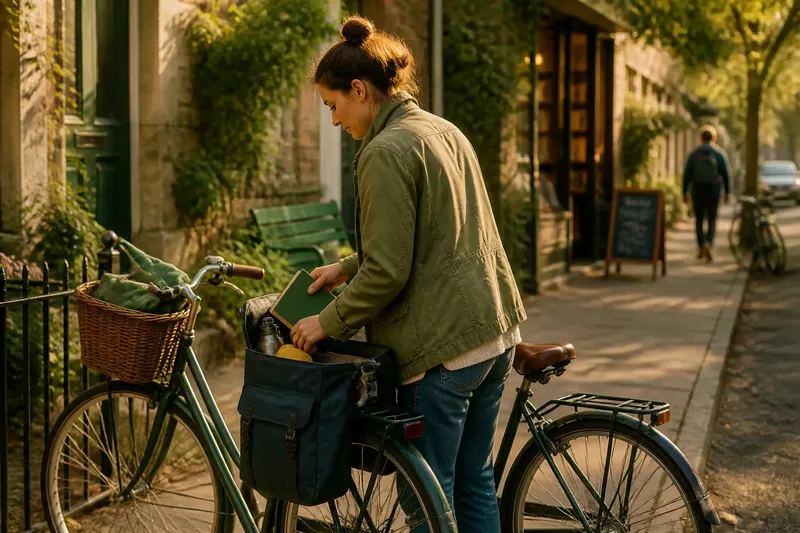
Should your things sit in a basket, travel in a pannier or stay on your back? Choosing between a bicycle basket, pannier or backpack comes down to how your belongings move from home to the bike, through each stop and into your destination.
Plan around the handoff at each stop
These options differ less in what they can carry than in how you take them with you. A basket stays on the bicycle, a pannier can usually detach from its rack, and a backpack travels on your body. That difference matters at a station entrance, a shop counter or a café table, where the ride ends and your walking routine begins.
Think through an ordinary outing: what do you carry out of the house, what do you need at a stop, and what must come indoors? If you visit several places, note whether you would rather move one bag from bike to shoulder or leave the container attached and take only its contents.
It is a little like choosing between a tray, a removable drawer and a coat pocket: each puts things in a different place, and each changes what you do next.
A basket keeps the carrying container on the bicycle
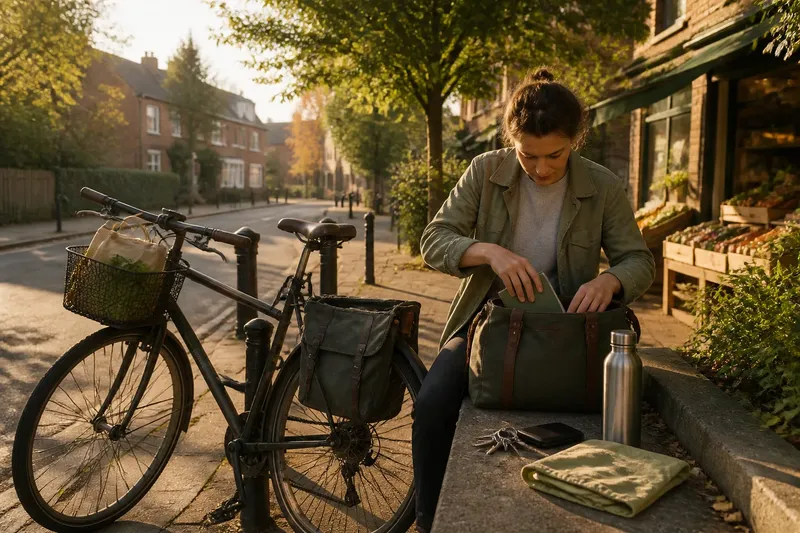
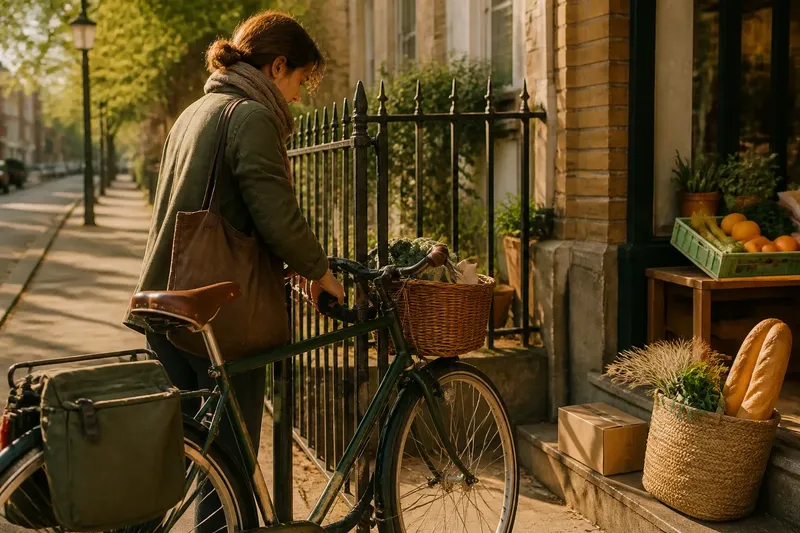
A basket suits belongings that you want to place in an open container, such as a folded shopping tote, a light jacket or a parcel. Its open top makes loading straightforward when you are stopped. A liner can help gather loose items, but the basket itself is not a bag to take indoors.
That distinction is useful if your destination has somewhere to leave the bicycle and you only need to carry a few things inside. If you need the whole load with you, plan to transfer it to a tote or carry the items individually. An open basket also leaves contents exposed to rain and curious passers-by, so take valuables with you when you park.
Front and rear placement shape the routine. A handlebar basket keeps the container near the front, while a rear basket leaves the handlebars clearer. Check the bicycle and basket instructions for a suitable fit, and make sure the position does not block controls, lights or your view.
A pannier turns the bicycle bag into a hand-carry
A pannier attaches to a rack and commonly has a handle or shoulder strap for the walk after parking. It can suit a commute, a library visit or a shopping trip if you want to take the contents together and prefer not to wear them during the ride.
Before choosing one, picture the doorway at your destination. Will you lift the pannier off the rack and carry it into work? Would you rather leave it on the bicycle and take just a book or lunch? The first routine makes a detachable bag useful; the second may call for a separate small carry option.
Fit depends on the rack, attachment system and bicycle. Check the maker’s fitting guidance before buying or loading a pannier, and follow any relevant local requirements. If your bicycle has no compatible rack, a conventional pannier may not suit it without a change to the setup.
A backpack keeps the same bag with you
A backpack needs no rack and stays with you after you lock the bicycle. If you already carry one to work, study or the shops, it may preserve a familiar routine: take it out of the house, ride, then walk inside without transferring belongings.
The trade-off is wearing the load. Some riders find a full or bulky pack uncomfortable, or warm over their usual clothes; others prefer having their things close. Consider how the bag sits when packed as you normally carry it, and keep its straps tidy. Stop somewhere safe before opening it or reaching for an item.
A backpack can be less convenient if you dislike wearing one indoors or need to change bags at your destination. In that case, a pannier that comes off the bicycle may offer a more natural handoff.
Compare the options by what happens after you park
- Basket: If you leave the bicycle and need only a few items, take those with you; if you need the whole load indoors, bring a separate tote or choose a bag you can carry.
- Pannier: If you want to carry the whole load into your destination, detach it; if you will leave it on the bicycle and need frequent access, consider where those items should sit instead.
- Backpack: If carrying the bag through the day feels comfortable, keep it with you; if the load feels awkward on your back, consider a bicycle-mounted option.
- Several stops: If you will repeatedly lock up and walk inside, choose the option that makes each transfer simple; if you stay with the bicycle, a basket may avoid carrying a separate bag.
- Changing loads: If the return journey includes groceries or a coat, decide where they will go before setting out; if they do not fit your chosen arrangement, take a suitable tote or use another carrying option.
- Existing equipment: If you already own a bag that suits the journey, try it in your routine first; if it lacks a practical way to travel on or off the bicycle, consider a different option.
Say you leave home with a zipped work bag, ride to a library, borrow a book and then walk to a café. In this invented situation, you want the bag off your shoulders while riding, but need it indoors at both stops. You check your bicycle’s rack instructions and find that your existing rack accepts a pannier attachment; you then place the work items in the pannier and leave room for the book. At the library, you detach the bag and carry it inside, then take it to the café. The resulting choice is a pannier: it preserves the desired riding comfort and makes both handoffs straightforward. If the rack were incompatible, the decision would change to carrying the backpack or using a basket with a separate tote.
Which carrying option fits your routine?
Can a basket take a shopping bag?
Yes, if the bag sits comfortably in the basket and does not interfere with the bicycle’s controls or view. If you need the shopping indoors, take the bag out at the stop rather than treating the basket as a hand-carry.
Do I need a rack for a pannier?
Many panniers attach to a rack, but attachment systems vary. Check the bicycle and bag makers’ fitting guidance to see whether your existing equipment is compatible.
Is a backpack suitable for a bike ride?
It can be, if its fit and weight feel manageable in your normal riding clothes. If it shifts or feels uncomfortable, consider a basket or a pannier that matches your bicycle.
Can I combine a basket and a pannier?
You can use more than one carrying option if the bicycle and equipment are suited to the arrangement. Check the makers’ guidance and keep the setup clear of controls, lights and your view.
Choose the arrangement that makes the destination easier
Before choosing a bicycle basket, pannier or backpack, run through your usual journey from the front door to the place where you put your things down. Include the walk from the bicycle, any stop where you need an item, and the trip home with anything you have collected. That sequence often makes the practical choice clearer than comparing bags in isolation.
If you already own a suitable bag, start there and pay attention to the handoffs that feel inconvenient. The best carrying setup is the one that lets you move from riding to walking without adding an awkward transfer to the day.